
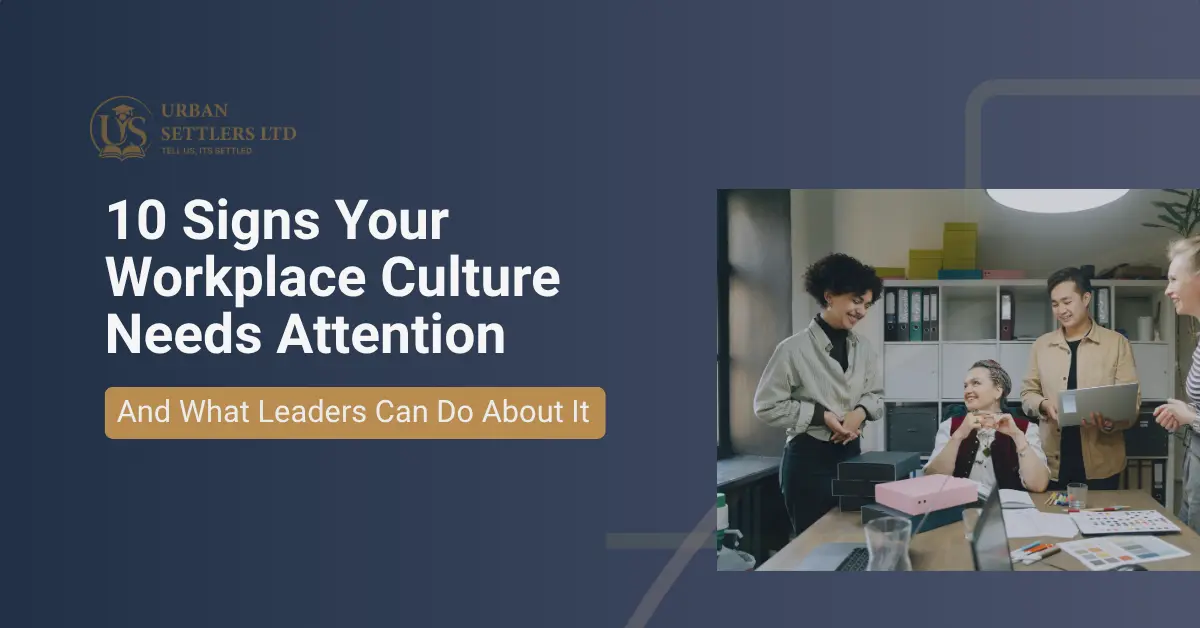
Ask ten leaders to define workplace culture, and you’ll likely hear ten different answers.
Some describe it as “the way we do things around here.” Others talk about values, behaviours or employee experience.
In reality, workplace culture is reflected in the everyday actions, conversations and decisions that shape how people work together. It influences whether employees feel trusted, whether managers communicate openly, how conflict is handled and how engaged people are in their work.
A healthy culture doesn’t happen by chance. It’s built intentionally through consistent leadership, clear communication and shared accountability.
If your organisation is experiencing low morale, increasing conflict or declining engagement, your workplace culture may be asking for attention.
Why Workplace Culture Matters
Culture influences every part of an organisation.
It affects:
- Employee engagement
- Recruitment and retention
- Collaboration
- Productivity
- Innovation
- Customer experience
- Wellbeing
- Reputation
A positive workplace culture helps people do their best work because they understand expectations, feel valued and trust the people around them.
An unhealthy culture, on the other hand, often creates uncertainty, frustration and disengagement.
10 Signs Your Workplace Culture Needs Attention
1. Employees Rarely Speak Up
When people stop sharing ideas or concerns, it’s often a sign they don’t feel psychologically safe. Innovation depends on people feeling confident enough to contribute.
2. Communication Feels One-Way
If information only flows from the top down, employees may feel disconnected from decisions that affect their work. Great cultures encourage dialogue, not just announcements.
3. Managers Avoid Difficult Conversations
Avoiding feedback doesn’t protect relationships.
It often damages them. In our just concluded Webinar, Handling Difficult Conversations we emphasized that constructive conversations help people grow, improve and feel supported.
4. Conflict Keeps Returning
Recurring conflict usually points to unresolved issues rather than difficult personalities. Healthy cultures address problems early and respectfully.
5. Recognition Is Rare
People want to know their work matters. Data compiled in the Gallup and Workhuman Recognition Report confirms that strategic recognition reinforces positive behaviours and deeply strengthens engagement.
6. Teams Work in Silos
When departments stop collaborating, knowledge is lost and progress slows. Cross-functional communication is essential for organisational success.
7. Change Is Met with Resistance
People are more likely to embrace change when leaders explain the purpose behind it and invite questions.
Communication builds confidence during periods of uncertainty.
8. Employee Turnover Is Increasing
While people leave organisations for many reasons, poor leadership and limited communication are among the most common. Insights from the Gallup Employee Experience Framework demonstrate that retention is directly tied to how valued a team member feels during daily operations.
9. Values Are Visible but Not Practised
Many organisations display inspiring values on their websites or office walls. The real question is whether those values are reflected in daily behaviours and decisions. Culture is measured by actions, not slogans.
10. Leaders Are Constantly Firefighting
If leaders spend most of their time resolving recurring issues rather than planning for the future, it may indicate deeper cultural challenges.
Strong cultures prevent many problems before they emerge.
How Leaders Can Strengthen Workplace Culture
Improving culture doesn’t require a complete organisational overhaul. It starts with consistent leadership behaviours.
Listen More Than You Speak
Employees are more engaged when they feel heard. Create regular opportunities for feedback and genuinely act on what you learn.
Communicate with Clarity
Clear expectations reduce confusion and build accountability. Consistency is just as important as frequency, which helps avoid the Hidden Costs of Poor Communication.
Invest in Leadership Development
Managers influence employee experience more than any policy or procedure. Developing leadership capability strengthens culture from the inside out.
Encourage Collaboration
Break down silos by creating opportunities for departments to share knowledge and solve problems together.
Address Issues Early
Small concerns rarely stay small when ignored. Timely conversations help prevent conflict and maintain trust.
Celebrate Positive Behaviours
Recognise not only results but also the behaviours that contribute to a positive workplace culture. Recognition reinforces the culture you want to build.
Frequently Asked Questions
What is workplace culture?
Workplace culture is the shared behaviours, values and ways of working that shape employees’ everyday experiences within an organisation.
Why is workplace culture important?
A healthy workplace culture improves engagement, collaboration, productivity, wellbeing and employee retention while supporting organisational performance.
Can workplace culture be improved?
Yes. Culture evolves through consistent leadership, effective communication, employee involvement and ongoing development.
Who is responsible for workplace culture?
Everyone contributes to workplace culture, but leaders play a critical role in shaping the behaviours, expectations and environment that influence how people work together.
Final Thoughts
Workplace culture isn’t created through mission statements alone.
It’s created through everyday leadership decisions, honest conversations and the way people treat one another.
When organisations invest in communication, leadership development and positive workplace behaviours, they create environments where people can thrive.
At Urban Settlers, we partner with organisations to strengthen workplace culture through practical training, leadership development and tailored organisational support.
If you’re ready to create a workplace where people feel engaged, supported and empowered to succeed, check out our upcoming Urban Settlers Events and Workshops to take your next step.