
Every manager remembers the conversation they didn’t want to have.
Perhaps it was addressing poor performance with a valued employee. Maybe it was resolving conflict between colleagues, or discussing repeated lateness with someone who was otherwise well-liked.
Many leaders delay these conversations because they fear making the situation worse.
Ironically, delaying them often does exactly that.
When difficult conversations are avoided, small issues become larger ones. Frustration builds, assumptions replace facts and trust begins to erode. Over time, problems that could have been resolved with one honest discussion become much harder to manage.
The good news is that being able to handle difficult conversations is not a personality trait, they’re a leadership skill. And like any skill, they can be learned and improved.
Why Managers Avoid Difficult Conversations
Avoidance is rarely about laziness or indifference.
More often, managers worry that they will:
- Damage the relationship.
- Say the wrong thing.
- Trigger conflict.
- Lower morale.
- Be unable to answer difficult questions.
- Make the employee feel attacked.
These concerns are understandable. However, avoiding the conversation usually has greater consequences than having it.
The Cost of Avoidance
When difficult conversations don’t happen:
- Performance issues continue.
- Team morale declines.
- High-performing employees become frustrated by inconsistent standards.
- Small misunderstandings grow into larger conflicts.
- Managers lose credibility.
- Employees miss opportunities to improve.
Leadership isn’t about avoiding discomfort.
It’s about navigating it constructively.
When Should You Have Such Conversations?
A good rule is this:
If the issue is affecting performance, relationships, wellbeing or the team’s ability to succeed, it’s probably time to talk.
Don’t wait for frustration to build.
Address concerns while they’re still manageable.
A Simple Framework for Difficult Conversations
Step 1: Prepare Before You Speak
Before the meeting, ask yourself:
- What is the purpose of this conversation?
- What outcome am I hoping for?
- What facts do I have?
- What assumptions am I making?
- How might the other person see the situation?
Preparation helps you stay calm and objective.
Step 2: Focus on Behaviour, Not Personality
Compare these two statements:
❌ “You’re unprofessional.”
✅ “I’ve noticed three deadlines were missed this month, and I’d like to understand what happened.”
One attacks identity.
The other discusses observable behaviour.
Behaviour can change.
Personal labels rarely help.
Step 3: Listen as Much as You Speak
When handling a difficult conversation, try not to make it a lecture.
Ask open questions such as:
- How do you see the situation?
- What challenges have you been facing?
- What support would help you succeed?
Listening demonstrates respect and often reveals information you didn’t have before.
Step 4: Agree on the Way Forward
End the conversation with clear next steps.
Clarify:
- What will change?
- Who is responsible?
- When will you review progress?
- What support is available?
Ambiguity after a difficult conversation often leads to repeated issues.
Step 5: Follow Up
One conversation rarely solves everything.
Checking in afterwards fosters accountability, reinforces expectations and helps maintain trust.
Phrases That Encourage Better Conversations
Instead of saying:
“You always…”
Try:
“I’ve noticed…”
Instead of:
“You need to improve.”
Try:
“Let’s explore what’s getting in the way.”
Instead of:
“This isn’t acceptable.”
Try:
“Can we talk about what happened and how we can prevent it happening again?”
Small changes in language often lead to much more productive discussions.
Common Mistakes to Avoid
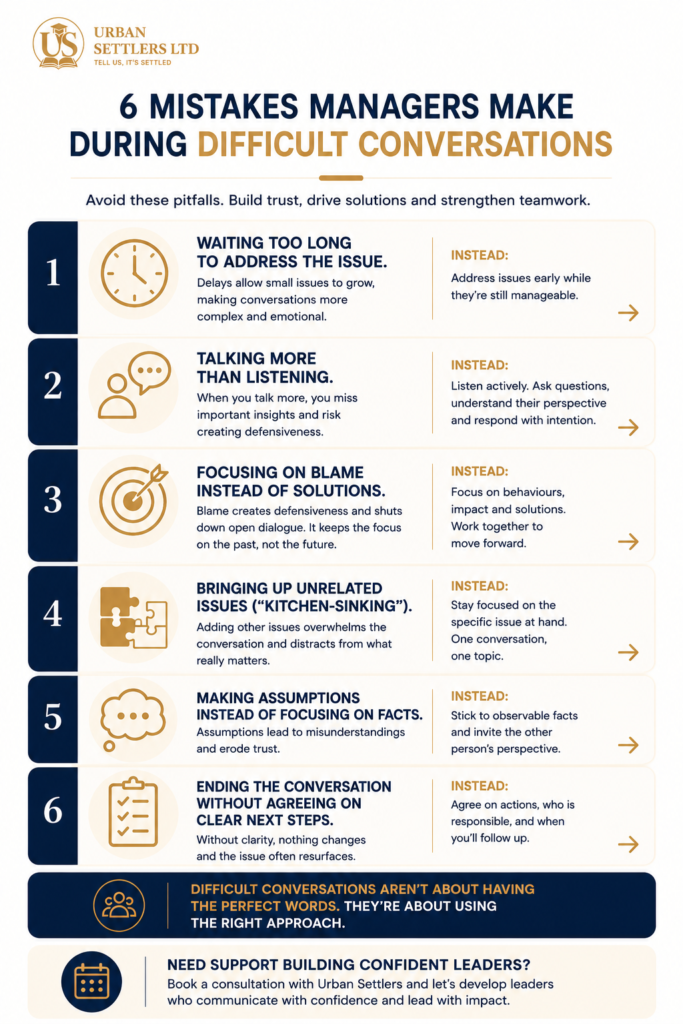
- Waiting too long.
- Talking without listening.
- Focusing on blame instead of solutions.
- Bringing up unrelated issues.
- Making assumptions without evidence.
- Leaving the conversation without agreeing on next steps.
Frequently Asked Questions
How do I start a difficult conversation with an employee?
Start with clarity and respect. Explain why you wanted to meet, focus on specific behaviours or situations, and invite the employee to share their perspective.
What if the employee becomes defensive?
Stay calm, listen actively and return to observable facts. Avoid arguing or making personal judgments. The goal is understanding and improvement, not winning the conversation.
Should difficult conversations happen immediately?
Address issues promptly, but don’t rush into a conversation while emotions are running high. Take time to prepare so the discussion is constructive.
Can difficult conversations improve relationships?
Yes. When handled respectfully, they build trust, clarify expectations and show employees that challenges can be addressed openly rather than avoided.
Final Thoughts
The conversations we avoid often become the problems we later wish we’d addressed sooner.
Strong leaders don’t enjoy difficult conversations any more than anyone else. What sets them apart is their willingness to approach those conversations with empathy, preparation and a genuine desire to help people succeed.
Handled well, a difficult conversation doesn’t damage trust, it strengthens it.
At Urban Settlers, we work with organisations to develop leaders who communicate with confidence, navigate difficult conversations effectively, and foster healthier workplace cultures.
Book a consultation today to discuss your organisation’s leadership challenges and discover how our tailored training and coaching programmes can help your managers lead with confidence