
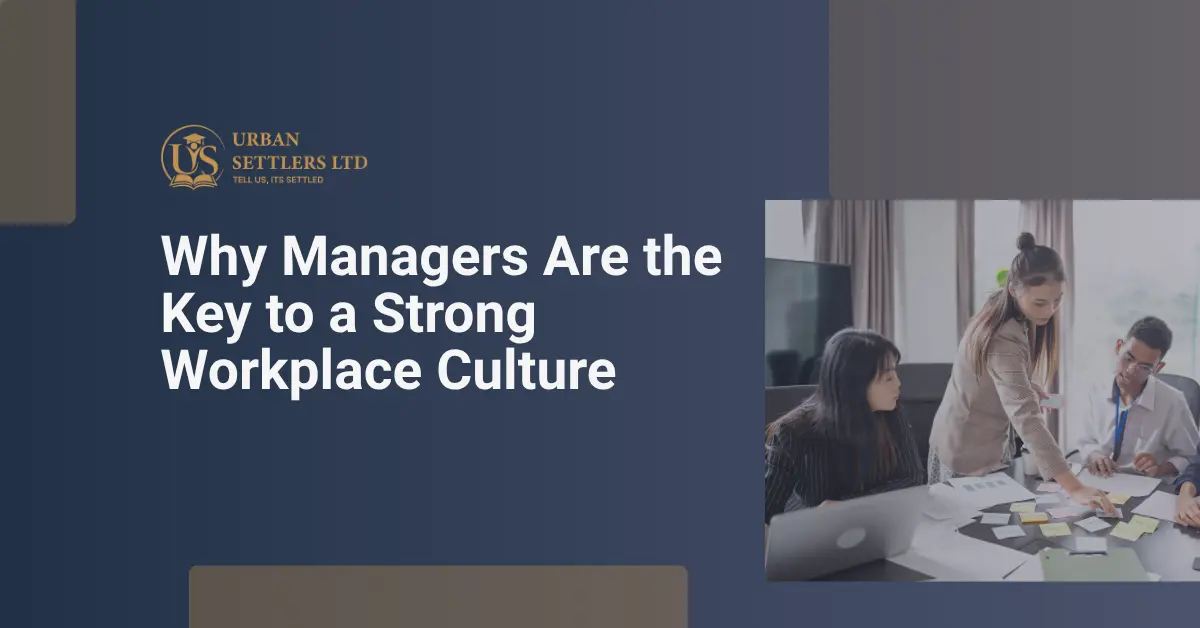
An organisation can have a clear set of values, a beautifully written mission statement and comprehensive workplace policies. But none of those things determine what employees experience every day.
Managers do.
Employees experience an organisation through the way their manager communicates with them, responds to mistakes, handles conflict, gives feedback, recognises good work and makes everyday decisions.
This means managers have an enormous influence on workplace culture.
Senior leadership might say, “Our organisation values respect, collaboration and employee wellbeing”. But if managers regularly dismiss employee concerns, reward unhealthy competition or communicate poorly, employees will experience a very different culture. This is why building a positive workplace culture isn’t solely the responsibility of senior leaders or HR. It is also about equipping managers with the skills, behaviours and confidence to turn organisational values into everyday practice.
What Is Workplace Culture?
Workplace culture is essentially how things are done within an organisation. This can influence:
- How people communicate.
- How decisions are made.
- How employees treat one another.
- How managers respond to mistakes.
- How conflict is handled.
- How performance is recognised.
- How comfortable people feel speaking up.
- How employees experience change.
Culture isn’t created by a single policy or team-building event. It is developed through repeated behaviours. For example, if managers consistently encourage employees to share ideas, the organisation may develop a culture where people feel comfortable contributing.
If managers consistently interrupt, dismiss or criticise employees, people may learn to remain quiet. The behaviours that leaders repeatedly reward, tolerate and model eventually become part of the culture.
Why Managers Have Such a Strong Influence on Culture
Managers occupy a unique position within an organisation. Senior leaders may establish the organisation’s vision and strategic direction, but managers often have the most frequent contact with employees. They influence the employee experience through everyday interactions such as:
- One-to-one meetings.
- Team meetings.
- Performance conversations.
- Feedback.
- Delegation.
- Recognition.
- Conflict resolution.
- Workload management.
- Communication.
The above makes managers culture carriers. They carry organisational expectations into the everyday working environment. When managers understand the culture an organisation wants to create, and have the skills to reinforce it, they can turn values from statements into behaviours.
8 Ways Managers Shape Workplace Culture
1. Managers Set the Tone Through Their Behaviour
Employees pay attention to what managers do. If a manager expects punctuality but regularly arrives late, employees notice. If a manager says that wellbeing matters but sends emails late at night and expects immediate responses, employees notice. If a manager encourages openness but becomes defensive whenever someone disagrees, employees notice.
Leadership behaviour communicates expectations more powerfully than many written policies.
Manager Tip
Before asking:
“Why aren’t employees following our values?”
ask:
“What behaviours are employees seeing from their managers?”
2. Managers Influence How Safe People Feel Speaking Up
Employees need to know that they can ask questions, raise concerns and offer different perspectives without being unfairly dismissed. This doesn’t mean managers need to agree with every opinion. It means employees should be able to contribute without fearing humiliation or retaliation.
A manager who responds to a difficult question with:
“That’s a good point. Let’s look at it.”
creates a different environment from one who responds:
“We’ve already discussed this. Just do what you’re told.”
Over time, these interactions shape whether employees feel comfortable speaking up.
This is closely connected to psychological safety. Urban Settlers’ article on Psychological Safety at Work explores how leaders can create environments where employees feel safer contributing, questioning and raising concerns.
3. Managers Shape Culture Through Communication
Communication isn’t simply about passing information from one person to another.
It’s also about how people experience the interaction. Managers influence culture through:
- How they give instructions.
- How they listen.
- How they respond to questions.
- How they provide feedback.
- How transparent they are.
- How they communicate difficult decisions.
A manager who communicates clearly and respectfully can help build a culture of trust. A manager who regularly communicates poorly or unpredictably can create confusion and frustration.
Ask Yourself
Does your team know:
- What is expected of them?
- Why their work matters?
- Where to go when they need help?
- How their performance will be assessed?
- When and how important information will be communicated?
If not, communication may be affecting the culture more than you realise.
4. Managers Define What Accountability Looks Like
A healthy workplace culture needs accountability. Accountability isn’t the same as blame.
Managers influence whether employees experience accountability as:
“Let’s understand what happened and improve.”
or:
“Who is responsible for this mistake?”
The first encourages learning. The second approach breeds defensiveness, finger-pointing, and a fear of risk-taking. When leading through change, managers must model a forward-looking accountability that focuses on systemic solutions rather than individual mistakes.
5. Managers Influence How Conflict Is Handled
Every workplace experiences disagreement. The difference is in how organisations respond to it.
If managers ignore conflict, employees may learn that problems should be avoided rather than addressed. If managers take sides without understanding the situation, they may damage trust. If managers encourage respectful conversations and address issues early, they can help create a culture where disagreement can be managed constructively.
Managers therefore play an important role in preventing everyday disagreements from becoming larger workplace problems. This will also become an important connection to Urban Settlers’ wider work around conflict management and workplace communication.
6. Managers Shape Culture Through Recognition
What gets recognised tends to get repeated. If managers recognise employees only for individual performance, they may unintentionally encourage competition. If you also recognise:
- Collaboration.
- Helping colleagues.
- Sharing knowledge.
- Taking responsibility.
- Supporting customers.
- Developing others.
they reinforce those behaviours. Recognition doesn’t always have to be financial.
A specific and genuine:
“Thank you for helping your colleague understand the new process. That made a real difference to the team.”
can reinforce the behaviour an organisation wants to see.
7. Managers Influence Employee Development
Employees learn a great deal from their managers. Managers can influence development by:
- Providing constructive feedback.
- Identifying development opportunities.
- Encouraging learning.
- Delegating responsibilities.
- Supporting career conversations.
- Coaching employees.
A culture of development is difficult to create if managers treat training as an inconvenience. When managers actively support learning, employees are more likely to see development as part of normal working life.
8. Managers Determine How Organisational Values Become Real
Many organisations have values such as:
- Respect.
- Integrity.
- Collaboration.
- Inclusion.
- Accountability.
- Innovation.
The important question is:
What does each value actually look like in everyday behaviour?
For example:
Value: Respect
A manager demonstrates respect by listening without interrupting, treating employees fairly and addressing inappropriate behaviour.
Value: Collaboration
A manager demonstrates collaboration by sharing information, encouraging teamwork and recognising collective achievements.
Value: Accountability
A manager demonstrates accountability by taking responsibility for mistakes and addressing performance issues fairly.
Value: Inclusion
A manager demonstrates inclusion by ensuring different voices are heard and making reasonable efforts to remove barriers to participation.
This is how values become culture.
When Managers and Organisational Culture Don’t Align
One of the biggest challenges organisations face occurs when the culture leaders want is different from the culture employees experience.
For example, an organisation may promote:
“Open communication.”
But managers may rarely ask employees for their views.
The organisation may promote:
“Employee wellbeing.”
But managers may consistently reward excessive workloads.
The organisation may promote:
“Collaboration.”
But managers may reward individual achievements while ignoring teamwork.
These inconsistencies can create cynicism. Employees learn that what the organisation says and what it does are two different things.
How Organisations Can Equip Managers to Build Better Cultures

If managers are expected to shape culture, organisations need to give them the tools to do it.
This goes beyond simply telling managers:
“Be a good leader.”
Managers need development or training in areas such as:
Communication
How to communicate clearly, listen actively and adapt communication to different situations.
Feedback
How to give constructive feedback without damaging trust.
Conflict Management
How to recognise conflict early and facilitate productive conversations.
Emotional Intelligence
How to understand their own reactions and respond effectively to others.
Coaching
How to support employees in developing their skills and solving problems.
Difficult Conversations
How to address sensitive issues directly while maintaining respect.
Change Leadership
How to support employees through uncertainty and organisational change.
These capabilities give managers the practical tools needed to turn cultural expectations into everyday behaviours.
A Simple Manager Culture Check
Managers can use the following questions to reflect on the culture within their team.
Communication
- Do employees understand what is expected?
- Do I listen before responding?
- Do I communicate important information clearly?
Trust
- Do employees feel comfortable raising concerns?
- How do I respond when someone disagrees with me?
- Do I follow through on commitments?
Accountability
- Are expectations clear?
- Do I address problems consistently?
- Do I distinguish between mistakes and misconduct?
Development
- Do I regularly discuss employee development?
- Do I provide useful feedback?
- Do employees have opportunities to learn?
Recognition
- What behaviours do I recognise?
- Am I recognising teamwork as well as individual performance?
- Do employees know what good performance looks like?
Culture
- What behaviours am I modelling?
- What behaviours am I tolerating?
- What behaviours am I rewarding?
These questions can help managers identify where their everyday behaviour may be strengthening—or weakening—the culture they want to create.
Culture Starts at the Top but It Lives in Everyday Interactions
It would be wrong to suggest that managers are solely responsible for workplace culture. Senior leaders, HR teams, organisational policies, systems and working conditions all matter. But managers have a particularly important role because they translate those organisational decisions into the employee experience.
Senior leaders might establish the values. HR might develop the policies. But employees often experience those values and policies through their manager. That is why investing in managers is also an investment in workplace culture.
Frequently Asked Questions
How do managers influence workplace culture?
Managers influence culture through their everyday behaviour, communication, decision-making, feedback, recognition, conflict management and treatment of employees.
What is the role of a manager in building a positive workplace culture?
Managers help create positive cultures by modelling organisational values, communicating clearly, supporting employees, addressing problems fairly, recognising positive behaviours and creating opportunities for development.
Can a manager negatively affect workplace culture?
Yes. Poor communication, inconsistent decision-making, favouritism, ignoring conflict, failing to address inappropriate behaviour and dismissing employee concerns can all contribute to a negative workplace culture.
How can managers improve workplace culture?
Managers can improve culture by identifying the behaviours they want to encourage, modelling those behaviours themselves, communicating consistently, listening to employees, recognising positive contributions and addressing problems early.
Why is leadership important to workplace culture?
Leadership influences the behaviours that employees see, experience and repeat. Strong leadership can reinforce trust, accountability, communication and collaboration, while poor leadership can contribute to disengagement and unhealthy workplace behaviours.
Does workplace culture come from senior leadership?
Senior leadership has an important influence on culture, but culture is reinforced throughout the organisation. Managers and team leaders play a particularly important role because they shape employees’ everyday experiences.
Final Thoughts
Workplace culture isn’t created during an annual strategy meeting. It is created in everyday interactions. It is created when a manager listens to an employee’s concern. When a team leader addresses conflict instead of ignoring it. When a manager admits a mistake. When an employee receives constructive feedback. When good work is recognised. When someone is given an opportunity to develop.
These moments may seem small individually, but repeated over time, they shape how employees experience an organisation. That is why managers matter so much. They are not simply responsible for allocating work and monitoring performance. They are also culture carriers. When organisations equip managers with the skills to communicate effectively, build trust, manage conflict, develop employees and lead consistently, they create stronger foundations for a healthy workplace culture.
How Urban Settlers Can Help
Building a strong workplace culture requires managers who understand how their everyday behaviour influences employees, teams and organisational outcomes.
Urban Settlers helps organisations develop confident, capable managers through practical workplace learning focused on leadership, communication, workplace culture and people management.
Whether you’re developing new managers, strengthening an existing leadership team or working to improve your organisational culture, tailored training can help turn organisational values into everyday behaviours.
Other resources you may find helpful
- Why Managers Are the Key to a Strong Workplace Culture
- Leading Through Change: Managers Can Keep Teams Engaged and Resilient
- 8 Everyday Leadership Habits That Build High-Performing Teams
- Difficult Conversations at Work: A Practical Guide for Managers
- Psychological Safety at Work: Why Employees Stay Silent