Workplace compliance is one of the most important responsibilities for any business. During our discussions with some small businesses in Aberdeen, we learned that, most small business see workplace compliance as something that only large organisations need to worry about. But for small and medium businesses (SMEs), compliance is just as critical, and the risks of getting it wrong are just as serious.
Recent regulatory pressures, changing laws, and increased scrutiny from regulators mean that non-compliance is no longer a “if it happens” risk. It is a “when will it happen” risk.
For business owners, HR managers, team leaders, compliance officers, and organisation directors, workplace compliance affects:
- Legal risk
- Workplace culture
- Employee safety
- Reputation
- Productivity
- Trust with clients, staff, and partners
This guide is designed to help SMEs understand what workplace compliance is, the key areas to focus on, how to build a practical compliance checklist, and how compliance training for employees can reduce risk and create a stronger, more accountable workplace.
What Is Workplace Compliance?
Workplace compliance refers to an organisation’s adherence to laws, regulations, industry standards, and internal policies that govern employee behaviour and business operations.
In simple terms, it means making sure your business does what it is legally required to do, follows the rules that apply to your sector, and runs according to your own policies and standards.
Legal obligations
Every business has legal obligations, including:
- Employment law (contracts, wages, rights, discrimination)
- Health and safety law
- Data protection (GDPR)
- Equality and diversity requirements
- Tax and reporting obligations
- Sector-specific regulations (e.g. healthcare, education, finance)
Internal policies
Beyond legal obligations, businesses also have internal policies that set standards for behaviour, processes, and decision-making. These may include:
- Codes of conduct
- Harassment and bullying policies
- Data protection policies
- Health and safety procedures
- Attendance and absence policies
- Whistleblowing policies
Industry regulations
Some sectors have additional requirements, such as:
- Healthcare (clinical standards, patient data)
- Education (safeguarding, data protection)
- Finance (financial conduct, reporting)
- Construction (safety, environmental rules)
Employee responsibilities
Workplace compliance is not only for managers or HR. Every employee has responsibilities, including:
- Following policies and procedures
- Reporting incidents or concerns (whistleblowing)
- Protecting data and information
- Working safely
- Respecting colleagues and clients
Example
A workplace requiring staff to complete anti-harassment training annually is demonstrating workplace compliance.
Why Workplace Compliance Matters
Reduced legal risk
Compliance helps businesses avoid legal issues such as:
- Employment tribunal claims
- Regulatory investigations
- Fines and penalties
- Civil claims
Improved workplace culture
When compliance is taken seriously, it creates a workplace where:
- People feel safe and respected
- Expectations are clear
- Behaviour is consistent
- Trust is stronger
Employee safety
Compliance ensures that health and safety rules are followed, reducing the risk of:
- Accidents
- Injuries
- Ill-health
- Workplace stress
Protection of company reputation
A business with poor compliance can lose trust quickly. Clients, staff, and partners may question whether the organisation is well-run, fair, safe, or reliable.
Increased productivity
When people understand what is expected and how to do things properly, the business runs more smoothly. There are fewer mistakes, less confusion, and fewer disruptions.
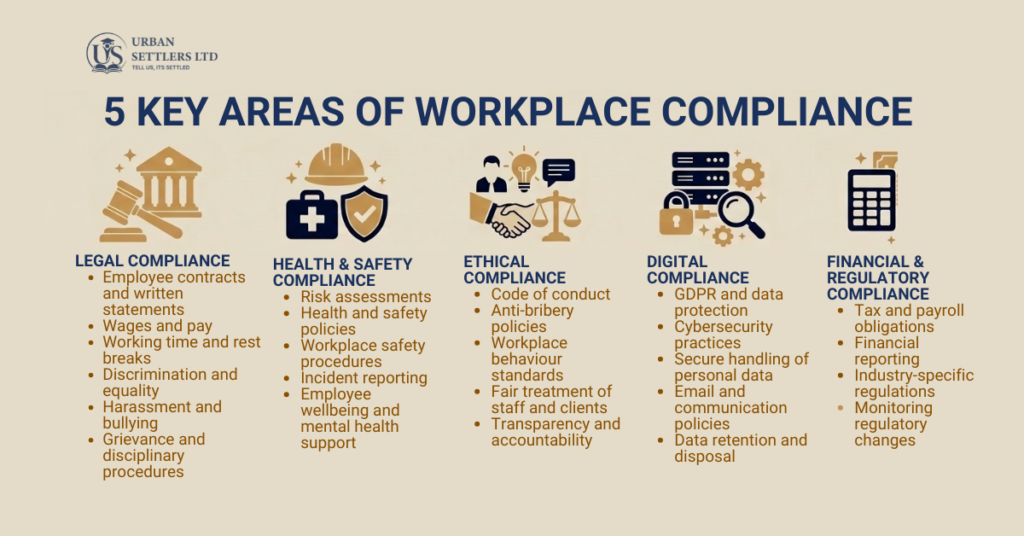
The 5 Key Areas of Workplace Compliance
1. Legal Compliance
Simply put, legal compliance means following employment laws, labour regulations, anti-discrimination requirements, and other legal obligations applicable to an organisation. Example: Every employee must receive a written statement of agreement and terms within 28 days of starting work. This helps to ensure all employees have valid contracts and receive the correct pay.
Key areas include:
- Employee contracts and written statements
- Wages and pay
- Working time and rest breaks
- Discrimination and equality
- Harassment and bullying
- Grievance and disciplinary procedures
2. Health and Safety Compliance
Health and safety compliance ensures that employees work in a safe environment and that risks are properly managed.
Key areas include:
- Risk assessments
- Health and safety policies
- Workplace safety procedures
- Incident reporting
- Employee wellbeing and mental health support
3. Ethical Compliance
Ethical compliance means doing what is right beyond legal requirements. It reflects the organisation’s values and standards. Example: Treating staff fairly, even when there is no strict legal requirement to do so
Key areas include:
- Code of conduct
- Anti-bribery policies
- Workplace behaviour standards
- Fair treatment of staff and clients
- Transparency and accountability
4. Digital Compliance
Digital compliance involves adhering to data protection regulations, cybersecurity requirements, and policies governing the secure handling of information. In the UK, the main law is the Data Protection Act 2018 and the UK GDPR. This includes ensuring employee data is stored securely and only accessed by authorised people.
Key areas include:
- GDPR and data protection
- Cybersecurity practices
- Secure handling of personal data
- Email and communication policies
- Data retention and disposal
5. Financial and Regulatory Compliance
Financial and regulatory compliance covers tax obligations, reporting requirements, and industry-specific regulations.
Key areas include:
- Tax and payroll obligations
- Financial reporting
- Industry-specific regulations
- Monitoring regulatory changes
What Are the 4 Cs of Compliance?
If you have often heard of the “4 Cs of compliance” and wondered what they are, they are;
- Commitment – Leadership support for compliance.
- Compliance – Adhering to laws and policies.
- Culture – Creating an environment where compliance is valued.
- Communication – Ensuring employees understand expectations.
Together, they help organisations build and maintain effective compliance programmes.
Common Workplace Compliance Examples
- Completing health and safety training
- Following data protection procedures
- Reporting workplace incidents
- Adhering to anti-discrimination policies
- Conducting employee background checks
- Maintaining accurate employee records
Workplace Compliance Checklist for Employers
✓ Employee contracts are current
✓ Health and safety policies are documented
✓ Staff receive regular compliance training
✓ Data protection procedures are in place
✓ Workplace harassment policies are enforced
✓ Employee records are maintained securely
✓ Incident reporting procedures exist
✓ Regulatory changes are monitored
✓ Compliance responsibilities are assigned
✓ Compliance audits are conducted regularly
Challenges Small Businesses Face with Workplace Compliance
Limited resources
SMEs often have limited time, budget, and staff to manage compliance.
Lack of expertise
Many small businesses do not have dedicated HR or compliance teams.
Changing regulations
Regulations change frequently, and keeping up can feel overwhelming.
Inconsistent training
Training may be irregular, generic, or not tailored to the business.
Poor documentation
Policies may exist but are not clearly written, stored, or updated.
How Compliance Training Helps Reduce Risk
Compliance training is one of the most effective ways to reduce risk and build a stronger compliance culture.
Awareness: Training helps people understand what compliance means and why it matters.
Behaviour change: Training helps people apply compliance in real situations, not just know the rules.
Risk reduction: Training reduces mistakes and helps people escalate issues early.
Stronger workplace culture: Training supports a culture of accountability and professionalism.
Improved confidence among managers: Training gives managers confidence to handle compliance-related decisions properly.
At Urban Settlers, we provide practical workplace training programmes that help employees understand their responsibilities, reduce risk, and create a culture of accountability.
Our compliance-related services include:
- Compliance Awareness Training
- Legal Awareness for Non‑Legal Professionals
- Workplace Communication Training
- Conflict Management Training
- Leadership Development
- Organisational Support Services
Frequently Asked Questions About Workplace Compliance
What is compliance in the workplace?
Workplace compliance refers to an organisation’s adherence to laws, regulations, industry standards, and internal policies that govern employee behaviour and business operations.
Why is workplace compliance important?
Workplace compliance helps organisations reduce legal risks, protect employees, maintain ethical standards, and build trust with stakeholders.
Conclusion
Compliance is more than avoiding penalties. It protects people, reputation, and business performance.
For SMEs, the best approach is proactive: building clear policies, providing regular training, monitoring compliance, and ensuring leadership commitment.
When compliance is built into everyday practice, the business becomes safer, more consistent, and more credible.
Ready to build a stronger compliance culture and reduce avoidable risk?
Book a free consultation with Urban Settlers to discuss a tailored compliance training programme for your organisation. We can deliver it in Aberdeen, across Scotland, or online, and adapt it to your team’s needs, sector, and compliance challenges.
If you want a more complete solution, you can also request a bespoke proposal that combines compliance training with legal awareness, workplace communication, conflict management, and leadership development — so your people are not only informed, but equipped to make better decisions every day.